Planning better
How to plan a trip around places you have saved
A practical method for turning a scattered wishlist into a trip: choose a base, group nearby places, budget time, and leave room to change plans.
 Walmo EditorialReviewed 3 November 2026 · 4 min read
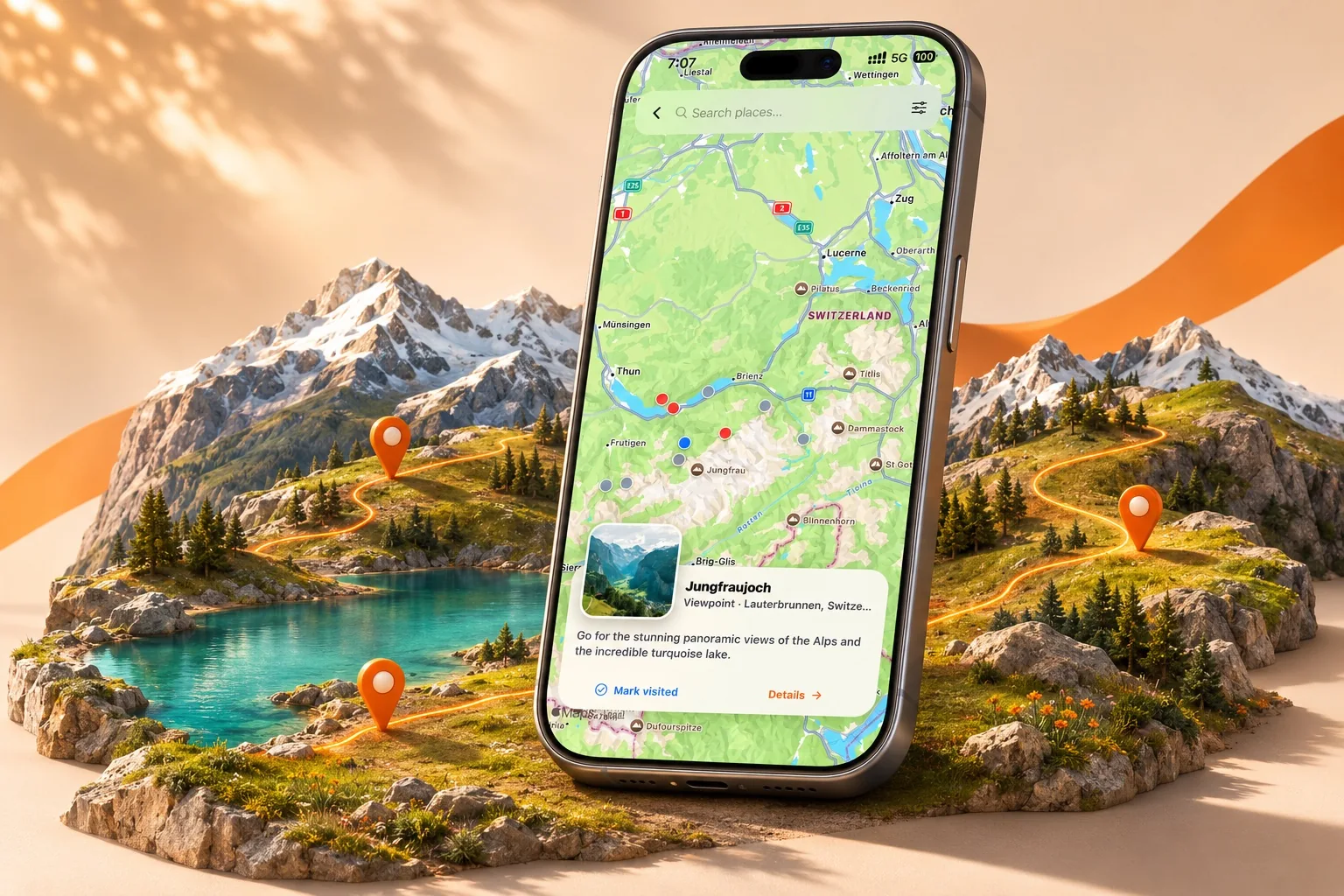
Your saved folder is a collection of possibilities. An itinerary is a set of choices. The difficult part is usually deciding which places belong together and which ones should wait for another trip. This method helps you make those decisions before paying for a route that is too ambitious.
You can use Walmo to import places from reels, see your collection on a map, and build an itinerary. The judgment still matters: a map pin does not tell you how long you want to linger, how tired the group will be, or whether a business is open on your dates.
The short version
- Choose one destination or base before sorting the whole wishlist.
- Group stops by location, then check actual travel and access.
- Plan a main outing and an optional extra, not a full-day chain of must-dos.
1. Give this trip its own collection
Start with the destination, dates, and people traveling. Review the reels and saved recommendations that actually match that trip. Import them into Walmo using direct sharing or the connected Instagram DM route, then inspect the extracted locations.
Remove duplicate entries and keep uncertain locations separate until you can identify them. If a reel recommends an entire region, do not assume every place in it is close to the town where you are staying. A smaller, more reliable list is easier to plan than a large collection of unresolved pins.
2. Separate priorities from possibilities
Choose the places that would genuinely make the trip special. A useful manual exercise is to write three short lists: essential, appealing if nearby, and save for later. You can keep these in your own planning notes; this is a decision method, not a claim about a special Walmo priority-setting feature.
If everyone traveling chooses several essentials, discuss the overlap before building the route. Two people may have saved the same place for different reasons, such as food, photography, or a long walk. That changes the time you should leave for it.
3. Look at the shape of the trip
Open the saved places on the map and notice the clusters. Pick accommodation with those clusters in mind, while also considering your arrival and departure. A stay that looks central to every pin may still be inconvenient if a river crossing, hill road, or limited transport separates the stops.
Check route travel times rather than relying on straight-line distance. Do not describe two stops as walkable until you have checked the actual route and access. If a place is far from everything else, make it the day’s main outing or leave it for another visit.
4. Build days around an anchor
Our suggested rule is one main outing, a meal plan, and an optional nearby stop. It is deliberately flexible. A museum day, a difficult walk, and an arrival day need different amounts of energy and time. Reserve the lighter plan for travel days.
Consider this illustrative two-day structure: day one is arrival, a nearby meal, and a short local visit if time allows. Day two is the main outing, a break, and one optional stop on the way back. The names and timings should come from your actual trip, not a generic template.
| Day type | Anchor | Optional extra | Leave room for |
|---|---|---|---|
| Arrival | Reach the stay and settle | A nearby café or walk | Delays and rest |
| Full day | One main outing | A stop along the route | Meals and local travel |
| Departure | Return transport | Only something close | Packing and terminal transfers |
5. Check the details that can break a plan
Confirm opening days and booking requirements from official or operator sources. Check whether a seasonal activity is running, whether the access route is open, and whether the whole group can manage the walking involved. Reviews and videos can help you discover a place, but they do not confirm today’s conditions.
- Write down fixed reservations and transport departures.
- Allow time for meals, queues, and local transfers.
- Check weather and access near the departure date.
- Decide which stop you will drop if the day runs late.
6. Review the Walmo itinerary before leaving
Use your dates and saved places to create the trip plan, then review it as a traveler. Check the start and end of each day, confirm the place identities, and make sure the selected stops match your priorities. Leave the less important ideas in the collection for another time.
Access to saved places and itineraries offline is useful, but map tiles require an internet connection. Confirm bookings separately and keep essential travel information available when connectivity is unreliable. The goal is a trip you can enjoy, not a complete record of every place you have ever saved.
Questions before you go
How many places should I plan for one day?+
There is no fixed number. We suggest one main outing and an optional nearby stop, adjusted for travel, effort, opening hours, and your group.
Will a map automatically show which routes are easy to walk?+
Do not infer that from pin proximity. Check the actual route, access, terrain, and your group’s needs.
Sources & editorial notes
Researched on 3 November 2026. Destination facts use the sources below; route choices, suggested pacing, and comparisons are Walmo editorial recommendations. This is desk research, not a report of a recent on-site visit. Travel details can change.
The Walmo steps reflect the product workflow described by the team and the app materials. Interface wording can vary by version.
Your next trip starts with a place.
Bring your saved reels and favorite spots together in Walmo.
Get Walmo for iOSMAKE IT YOUR OWN